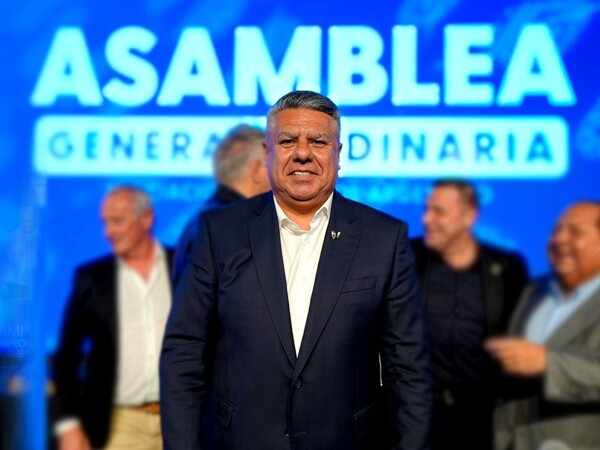
In the football ecosystem, the case became a boiling point because the file not only points to accounting and payment circuits: it places the first line of the AFA under judicial scrutiny and threatens to affect its international agenda, its rights negotiations, and above all, the political stability of a leadership that moves with corporate reflexes when it perceives a risk. The phrase that summarized the spirit of the meeting came from the president of Vélez Sarsfield, Fabián Berlanga: “If necessary, yes,” he said to journalists when asked about the possibility of stopping. The risk, however, is that the remedy could be worse: that society reads the maneuver as a demonstration of impunity, or that pressure becomes fuel for the case to grow. With the ball in the air, Argentine football enters a week that will be as judicial as it is sporting. And in a country where football is often an emotional refuge, the feeling that sets in is bitter: when the leadership plays its own game, the fan is left watching from the outside, waiting for the truth—and the calendar—to return to their place. The political reading that hovered over the leaders' meeting is clear: the AFA leadership seeks to turn a criminal-economic investigation into an institutional conflict, portraying the Justice and the Government as responsible for a “war against football.” The decision, taken in the Executive Committee of the LPF and then communicated publicly, was supported by a slogan that executives repeated after the meeting: the rejection of the complaint by ARCA for alleged irregularities related to Income Tax, VAT, and social security contributions in different months of 2024 and 2025, for a total of 19,353 million pesos. Argentine football moves gigantic figures, manages television rights, sponsorships, transfers, and competition revenues, and does so in a country where social sensitivity to tax evasion and privileges is extremely high. This argument—always from the AFA perspective—aims to shift the focus from the alleged undue retention to a dispute over enforceability, deadlines, and criminal framing. But the problem for the football leadership does not end in the technical. And at this point, the most delicate tension arises: to what extent can the AFA use the sporting calendar as a mechanism of pressure on judicial cases? But in political terms, it is a photo feared by any leadership. In the coming hours, the decision must be framed within the institutional structure of the AFA, although in the football world it already moves as a fait accompli: if there is no turning back, the Apertura Tournament will be interrupted, and the chain of impact will reach broadcasts, logistics, security, provincial operations, and commercial commitments. And he backed that up with an argument already circulating as an internal line of the AFA leadership: that behind the conflict looms an attempt to impose the model of Sports Corporations (SAD), a discussion that has divided waters for years and that the AFA leadership uses as an identity flag against any state intervention or structural reform. This backdrop shows that, even with formal unanimity, the leadership world is not homogeneous: there are those who adhere out of conviction, those who do so out of discipline, and those who prefer to step aside to not be trapped in a war that can change owners over time. The move also has a symbolic side: stopping the ball in the middle of a tournament is an act of power. In recent hours, however, the magistrate authorized an exception at Tapia's request: he authorized him to travel to Colombia and Brazil to fulfill commitments linked to CONMEBOL, on the condition of a real bail of 5 million pesos as a guarantee of his submission to the process. This last point did not go unnoticed because Estudiantes maintains an open dispute with the AFA leadership and has been questioning regulatory and political decisions within the organization. According to the entity, the controversy lies in that ARCA intends to consider as the basis for a possible tax crime obligations “not yet due” and that “cannot even be collected,” while the defensive proposal has already been presented to the intervening court and is pending resolution in the Appeals Chamber. His detractors describe it as a “squeeze” to condition the Judiciary, with society as a hostage of a conflict it did not choose. At the heart of the conflict, the criminal-economic case will have to clarify basic questions: whether there was or was not undue retention; whether there was fiscal damage; whether payments were actually made on time and in the correct manner; and above all, how obligations were managed when the AFA claims there was no default. The leadership's bet is that the cost of stopping is less than the cost of being exposed. The scene fed two opposite readings: for the AFA, it is a sign of normality that allows it to maintain its agenda; for critics, it is a symptom of how football politics tries to preserve its operation even under suspicion. In parallel, the AFA issued a statement with an unusually tough tone, denying the existence of a payable debt and stating that the questioned tax and social security obligations were paid “in advance of their due date.” Argentine football was on the verge of an extreme measure with an impact on all categories: the Professional Football League (LPF) decided to elevate to the Argentine Football Association (AFA) a unanimous request from the First Division clubs to stop activity between March 5 and 8, days on which the start of the ninth round of the Apertura Tournament was scheduled to be played, and at the same time, the investigative statements of President Claudio Fabián “Chiqui” Tapia and Treasurer Pablo Ariel Toviggino are scheduled in a case originated by a complaint from the Revenue and Customs Control Agency (ARCA). “The members have already made their position clear,” was, in that same vein, another of the messages that leaders replicated. The measure is better understood when looking at the judicial calendar. The file is processed in the economic criminal court and is in the hands of Judge Diego Amarante, who days ago had ordered exit restrictions from the country for the accused. ARCA's complaint hits where it hurts most: in trust and control. It is not a workers' strike, but a leadership decision that uses the show as a negotiation tool. The investigative statement, by its nature, is not a conviction: it is a stage of defense and explanation. The leadership denies it and presents it as an institutional defense against an external offensive. In this type of proceedings, details matter: due dates, registrations, bank confirmations, sworn statements, and the decision-making circuit within the entity. That is why the gesture of “stopping everything” operates as pressure and as a shield: pressure on the political and judicial system so that the case does not advance with speed; internal shield to show the cohesion of the clubs behind Tapia and Toviggino, and to discourage fissures that could become governance ruptures. At the meeting, there were absences with notice: Boca Juniors (which was traveling for Copa Argentina commitments), Aldosivi, Estudiantes de Río Cuarto, and Estudiantes de La Plata. Tapia's investigative statement is scheduled for March 5, and Toviggino's falls in the same window. Buenos Aires - February 23, 2026 - Total News Agency - TNA -.